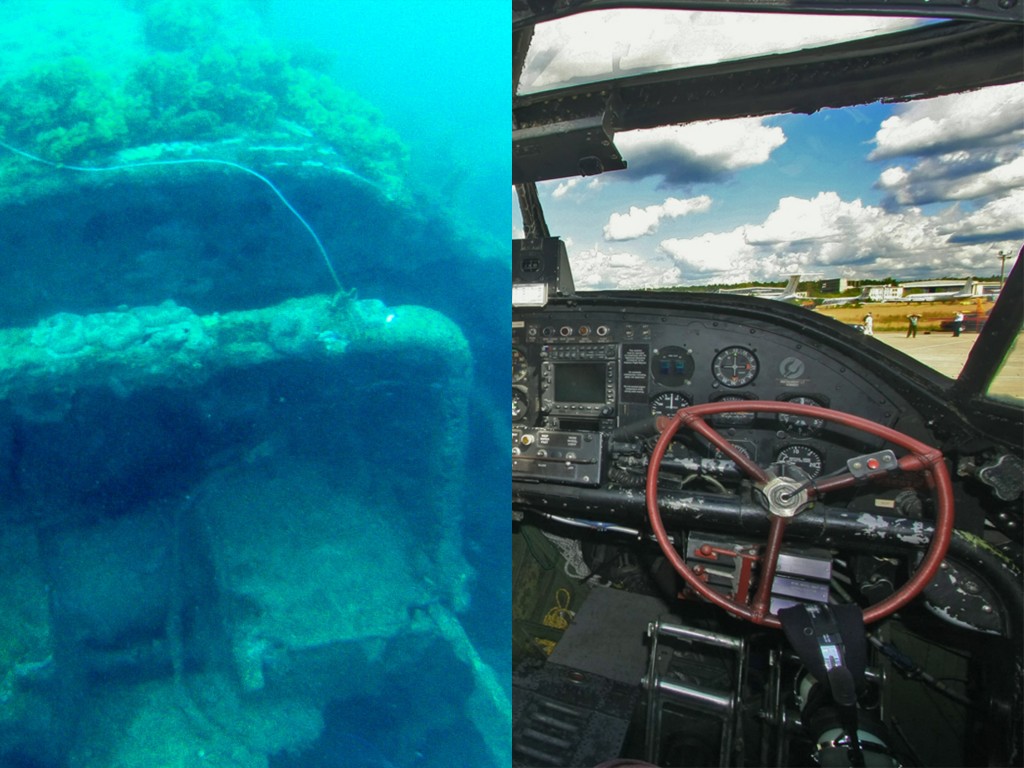
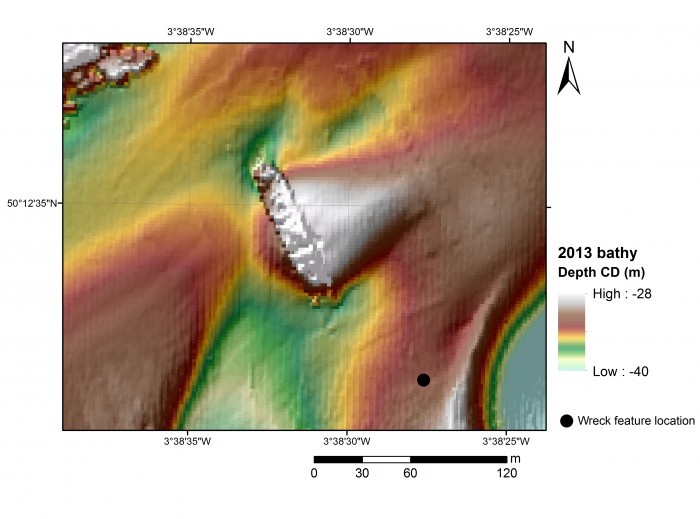
HMT Arfon has been in the news recently, the wreck having been identified off Dorset by Martin, Bryan and the team at Swanage Boat Charters. It subsequently became the 52nd site to be designated under the Protection of Wrecks Act 1973 (https://historicengland.org.uk/whats-new/news/Arfon-Wreck-Protected) meaning that a licence is required to dive the site.
Ten of the Arfon’s 13 crew were killed when the vessel hit a mine while minesweeping in April 1917 and they have now been added to a new Community on the Imperial War Museum’s ‘Lives of the First World War’ digital memorial. The Maritime Archaeology Trust’s HLF Forgotten Wrecks of the First World War project has created the Community and hopes that relatives of the Arfon’s crew, a number of whom are known to exist, may be able to add to the crews’ Life Story pages, with photos and information.
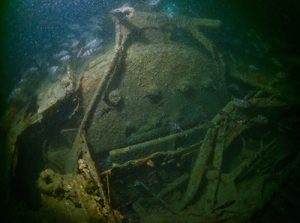
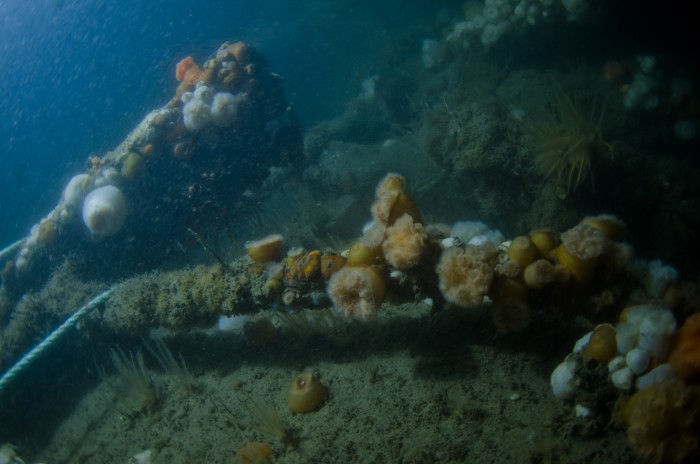
The Arfon’s boiler, May 2016. Image: Maritime Archaeology Trust
The three crew members who survived the tragic accident will soon be added to the Community which can be found at: https://livesofthefirstworldwar.org/community/3850
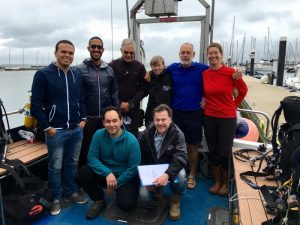
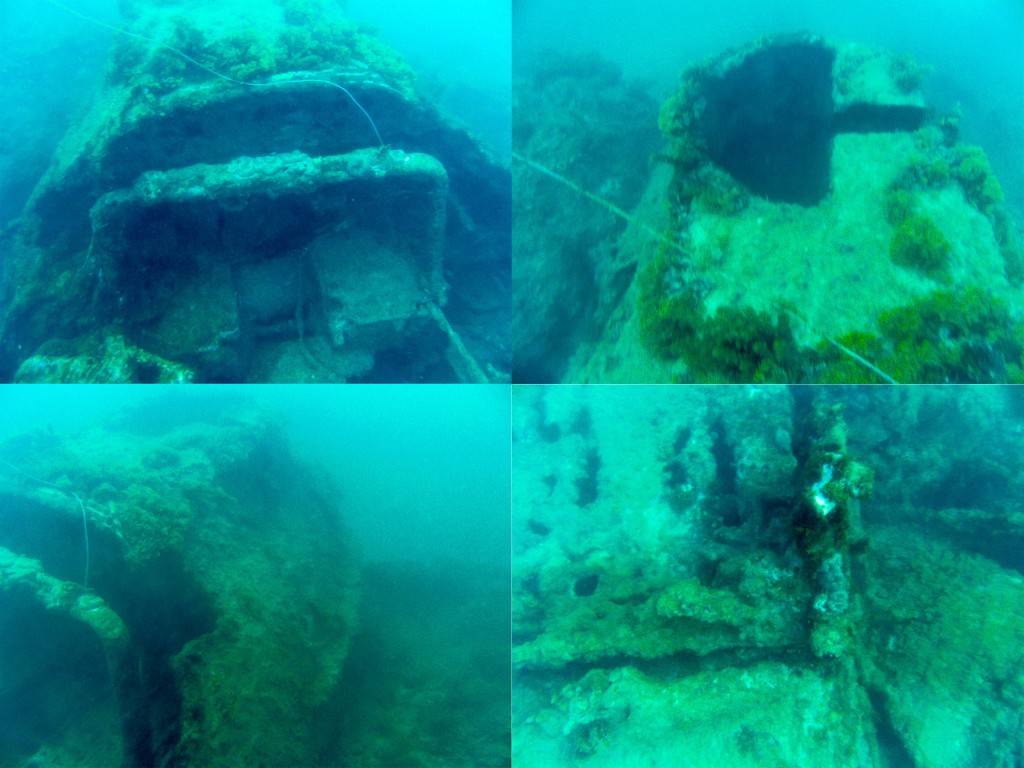
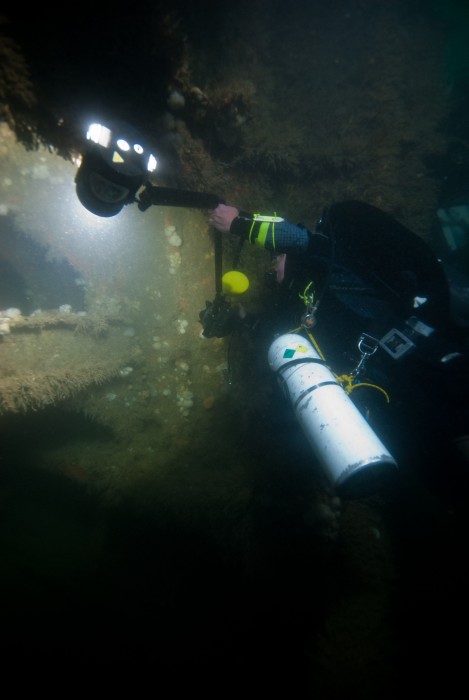
In May of this year, MAT divers were excited to be able to join Swanage Boat Charters for a dive on the wreck of the Arfon. We were able to assist with taking survey photographs of some of the fascinating features, fixtures and fittings on this well preserved site. Unfortunately, the conditions were not quite clear enough to gain the photographs needed for producing a full 3D model of the site on this occasion.
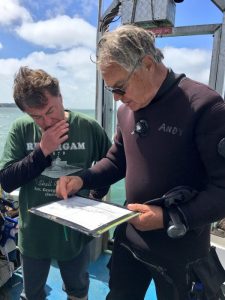 Another day on Bouldnor Cliff reveals another exciting discovery. Garry Momber took part in the day’s first dive, and began to clear away some of the layer of mud covering the site. Underneath this mud he found a series of planks lying parallel to each other. Further dives will include more work on this potential platform, so the archaeologists can try to interpret the feature and its purpose. Yesterday, a diver found and recovered a small piece of flat, pointed timber that may turn out to be the end of a plank. Garry also recovered a small piece of wood, demonstrating the excellent preservation on this site. It is still possible to find organic material that is over 8,000 years old!
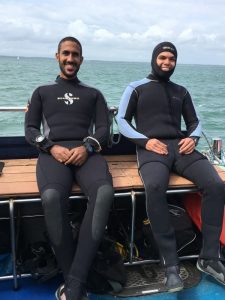
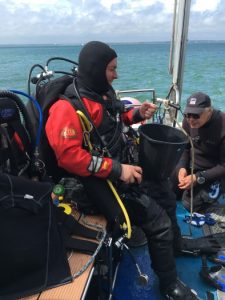 Miguel, Ziad, and Mohamed are still hard at work on the photogrammetric work. Miguel has been acting as underwater photographer, taking pictures of Garry at work and using a 6m x 2m grid to take photos to create a photogrammetric model of the site and some of the exposed timbers. Ziad and Mohamed are doing similar work, both with and without photogrammetric targets. The divers are working hard to ensure they don’t damage any of the exposed timbers as they do their work, and are being careful where they use targets. In places where the timber is fragile, it may be better to work without them. Eventually, the hundreds of photos taken will be combined together. They will be used to create a 3D model of the Mesolithic site, which can be manipulated and interpreted, and used for further study.